
Discover how an All-Payer Claims Database (APCD) delivers vital insights that drive health improvement, enhances transparency, enables precise cost analysis, and supports better care and health outcomes.
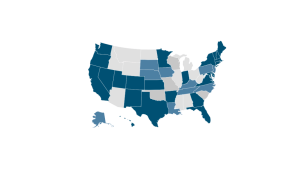
An All-Payer Claims Database (APCD) is a large-scale data system that collects health care claims data from a wide range of payers, including public and private health plans. These databases are designed to bring together information from across the health care system to provide a more complete picture of how care is delivered, used, and paid for. By aggregating data from multiple sources, APCDs enable states, policymakers, researchers, and health care leaders to better understand health care utilization, cost, and coverage across populations.
We gratefully acknowledge the APCD Council for its contributions, guidance, and support in developing this page. The APCD Council is a program of the National Association of Health Data Organizations (NAHDO). Learn more at apcdcouncil.org and nahdo.org.
An All-Payer Claims Database typically includes several core types of data that reflect the full patient journey across the health care system:
Medical claims capture services provided across settings such as hospitals, physician offices, and outpatient facilities, including diagnoses, procedures, and payments.
Pharmacy claims include prescription drug information, such as medications dispensed, dosage, and associated costs.
These files include demographic and coverage information, enabling population-level analysis and tracking of health care utilization over time.
Dental claims provide insight into oral health services and utilization patterns.
Provider files include information about health care providers and organizations, such as specialties, locations, and affiliations.
Non-claims payment data capture payments not linked to individual claims, including value-based payments and care management fees.
In addition, APCDs often include provider and plan information as well as financial and utilization data, supporting a comprehensive view of the health care system.
All-Payer Claims Databases play a critical role in improving system performance. Here is why an APCD is important:
Most All-Payer Claims Databases are established at the state level through legislation or voluntary data-sharing arrangements. Health plans, insurers, and other entities regularly submit claims data to the state APCD. This data is standardized, validated, and aggregated to create a centralized resource that supports reporting, analytics, and data-driven decision-making. Many states also establish governance structures and data access policies to ensure appropriate use and protection of sensitive information.
A wide range of stakeholders rely on All-Payer Claims Database data, including:
Seeking to improve health care affordability and system performance
Using the data to inform care decisions and make care more affordable
Working to benchmark performance and improve care delivery
Analyzing trends in utilization, cost, and outcomes
Evaluating cost drivers and value
In some states, accessing public reporting tools to better understand health care costs
For tangible examples, please visit the APCD Council Showcase webpage.
All-Payer Claims Databases offer a uniquely comprehensive view of health care by aligning claims across payers, providing insights unavailable from any single source. They help stakeholders understand how and where health care dollars are being spent, enabling measurable improvements in system performance. In a modern health data ecosystem, APCDs serve as a foundational asset that complements clinical sources—such as electronic health records and health information exchanges—by adding a financial and utilization lens across the full continuum of care. Key benefits include:
As noted in APCD-focused research, these databases help stakeholders understand “how and where health care dollars are being spent,” enabling more effective and measurable health system improvements.
Unlike datasets maintained by a single insurer or organization, an All-Payer Claims Database aggregates data from multiple public and private payers. This creates a more comprehensive and unbiased view of health care utilization, costs, and coverage patterns across an entire population.
Data is generally submitted by a wide range of entities that pay for health care services, including:
These contributors help ensure APCDs reflect a broad view of health care activity across payers.
APCDs operate under strict data governance frameworks that include:
State agencies are responsible for ensuring that APCD data are used appropriately and securely.
APCDs are widely used in research to examine:
Because they include multi-payer, population-level data, APCDs are especially valuable for large-scale analyses.
While APCDs provide significant insight, they also have known limitations, including:
These factors should be considered when interpreting APCD data.
By providing a comprehensive view of cost, utilization, and coverage, All-Payer Claims Databases enable stakeholders to:
Access to APCD data is governed by each state and typically requires:
Some states also offer public dashboards or aggregated reports for broader access.
Thank you to the APCD Council, a program of NAHDO, for guidance on this content, and to the Center for Improving Value in Health Care (CIVHC), and Virginia Health Information (VHI) for providing support and real-world APCD applications.
| Cookie | Duration | Description |
|---|---|---|
| cookielawinfo-checkbox-analytics | 11 months | This cookie is set by GDPR Cookie Consent plugin. The cookie is used to store the user consent for the cookies in the category "Analytics". |
| cookielawinfo-checkbox-functional | 11 months | The cookie is set by GDPR cookie consent to record the user consent for the cookies in the category "Functional". |
| cookielawinfo-checkbox-necessary | 11 months | This cookie is set by GDPR Cookie Consent plugin. The cookies is used to store the user consent for the cookies in the category "Necessary". |
| cookielawinfo-checkbox-others | 11 months | This cookie is set by GDPR Cookie Consent plugin. The cookie is used to store the user consent for the cookies in the category "Other. |
| cookielawinfo-checkbox-performance | 11 months | This cookie is set by GDPR Cookie Consent plugin. The cookie is used to store the user consent for the cookies in the category "Performance". |
| viewed_cookie_policy | 11 months | The cookie is set by the GDPR Cookie Consent plugin and is used to store whether or not user has consented to the use of cookies. It does not store any personal data. |